
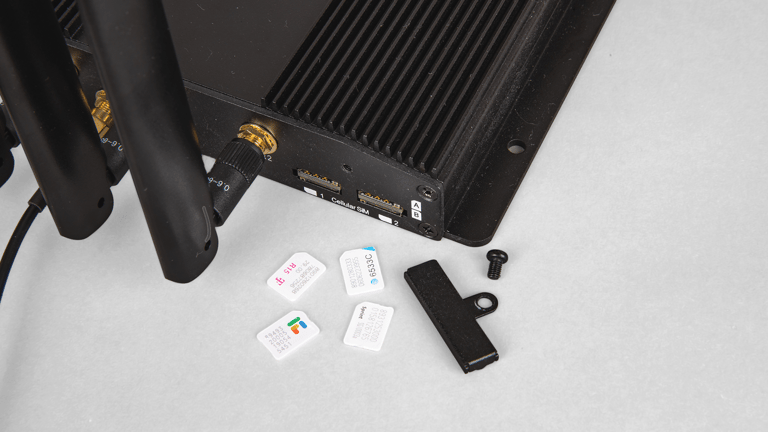
A multi-SIM router is a device that has slots for multiple Subscriber Identity Module (SIM) cards and can switch between them or use them simultaneously to provide network connectivity. Some SIM routers [link to new 5G SIM router page] can handle as many as eight SIM cards – and even up to 48 for very specialized use cases – from the same or different providers for bandwidth bonding or for eliminating blind spots or dead zones, which can boost your signal strength and increase Internet performance.
Redundancy, Reliability, and Failover Protection:
SIM routers with multiple SIM card slots provide redundancy and increased reliability by automatically switching between SIM cards and networks when a network experiences downtime or poor connectivity. This can be extremely valuable when you’re working in a remote location, or work in a critical field that depends on continuous internet connectivity, like emergency healthcare services.
Load Balancing:
By balancing network traffic across multiple SIM cards or networks, multi-SIM routers can increase overall bandwidth, ensuring better performance and connectivity. If you have high data usage requirements or need to support multiple devices, load balancing is key.
Network Coverage:
By housing SIM cards from different carriers, a multi-SIM router can leverage a broader coverage area. When one carrier has weak or no coverage in a particular location, another carrier’s SIM card might offer a strong signal.
Flexibility:
Multi-SIM routers enable you to easily switch between different carriers or data plans based on your needs or cost considerations. This can be valuable for businesses or individuals who travel frequently or require Internet access in various locations. While 5G SIM routers work with 4G SIM cards, 5G SIM cards [link to new page – Do you need a 5G SIM card for a 5G router] enable 5G routers to capitalize on all the benefits of 5G.
Scalability:
If you anticipate expanding your network in the future, a multi-SIM router can offer scalability by accommodating additional SIM cards without the need for significant hardware changes.
VPN and Security Features:
Many commercial-grade multi-SIM routers also offer Virtual Private Network (VPN) capabilities for secure connections over public cellular networks.
Wifi Extendor :
A Wi-Fi extender (or range extender) is a networking device that boosts your existing router’s signal to cover dead zones, such as distant rooms or multiple floors. It works by capturing the Wi-Fi signal from the router and rebroadcasting it, essentially creating a bridge to extend the network's reach.
Eliminates weak signals, providing a more stable connection in remote areas of a home or office.
It picks up the main router's signal and rebroadcasts it, acting as a "middleman".
Usually plugged directly into a wall outlet, situated halfway between the router and the area with poor coverage.
Most connect to the router via Wi-Fi, though some support Ethernet cables for better, more direct performance.
While they extend range, they may reduce the available bandwidth by up to half, as they must communicate with the router and devices simultaneously.